Project 01
Stryker Performance / Power PRO XT Locker System in Leonardo AW101
Redesigned a preliminary Stryker ambulance stretcher locker system to meet RNoAF 330 Squadron and rotorcraft OEM requirements for maximum mass and operability. The revision reduced mass by 25% relative to the original design and incorporated user feedback on functionality.
- Role
- Junior Design Engineer
- Place of Work

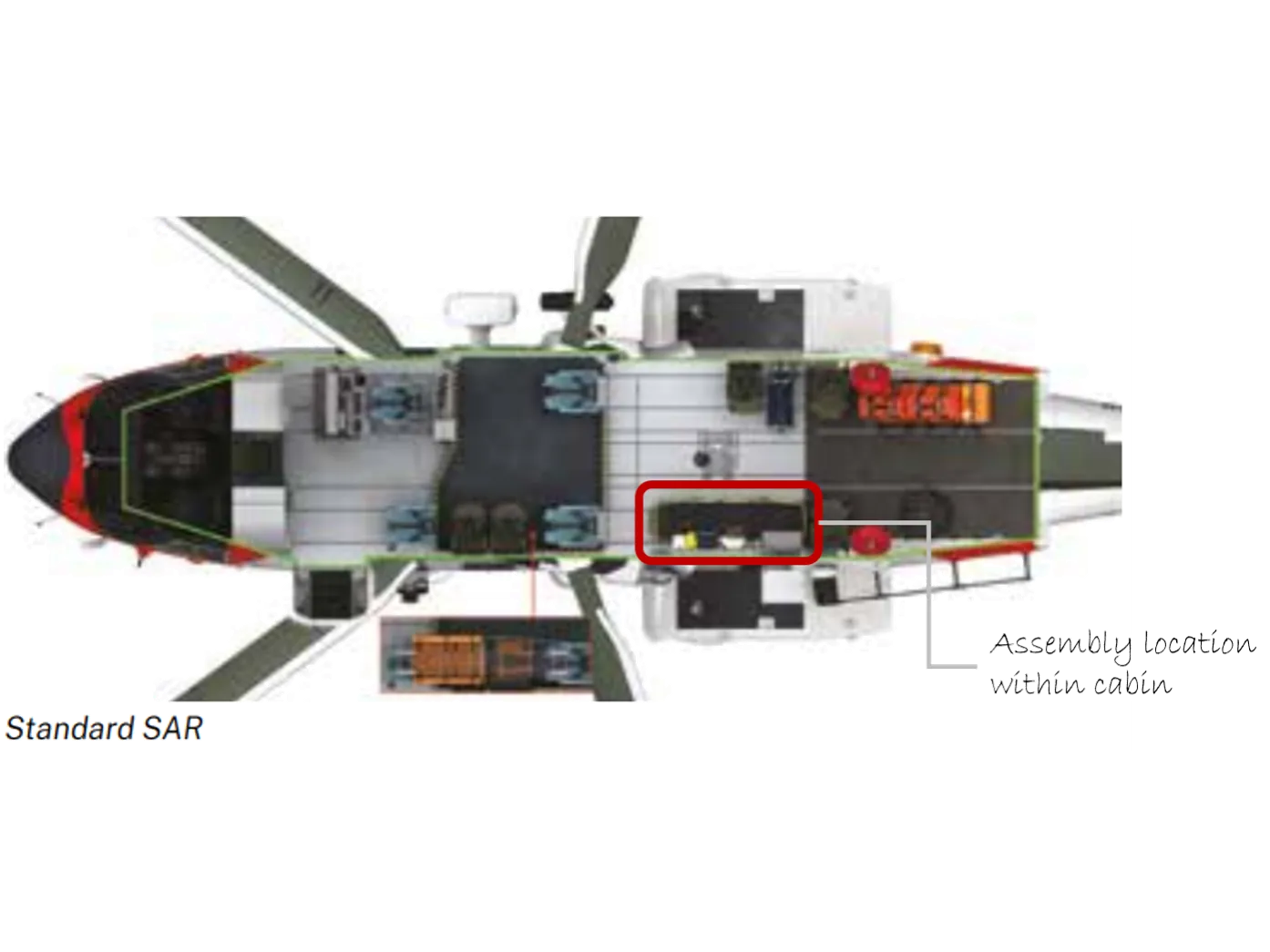
The problem
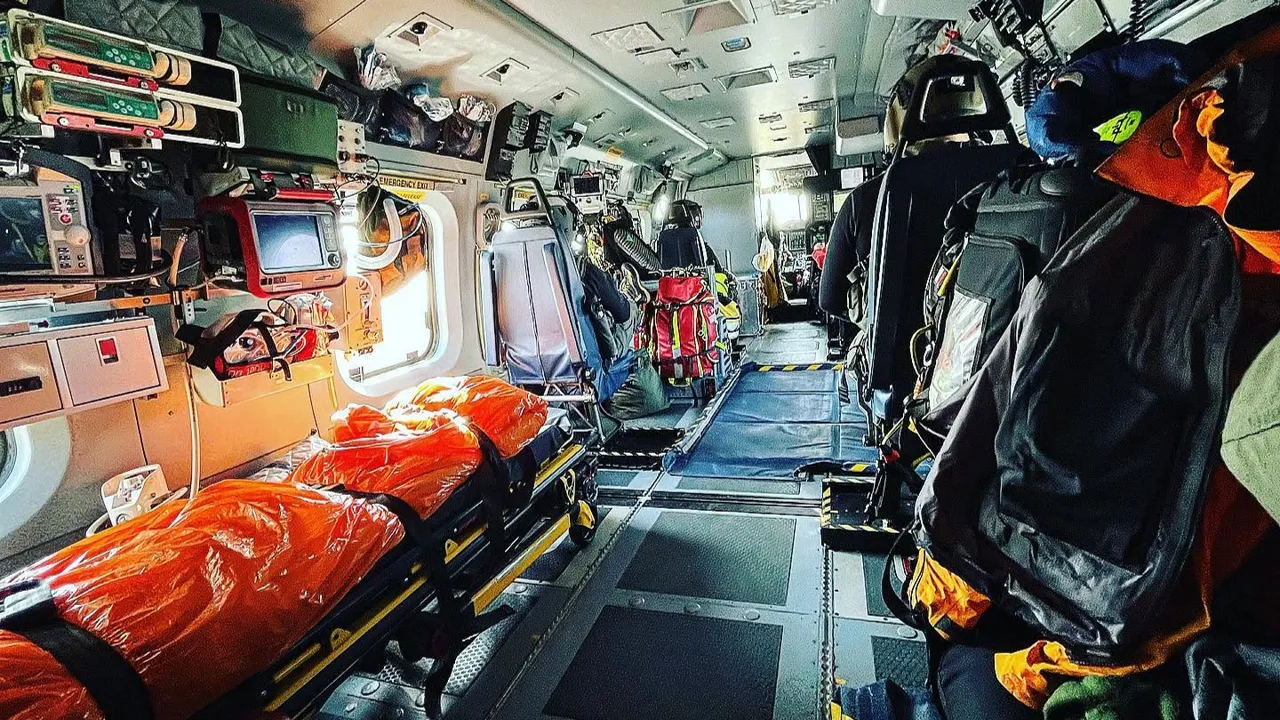
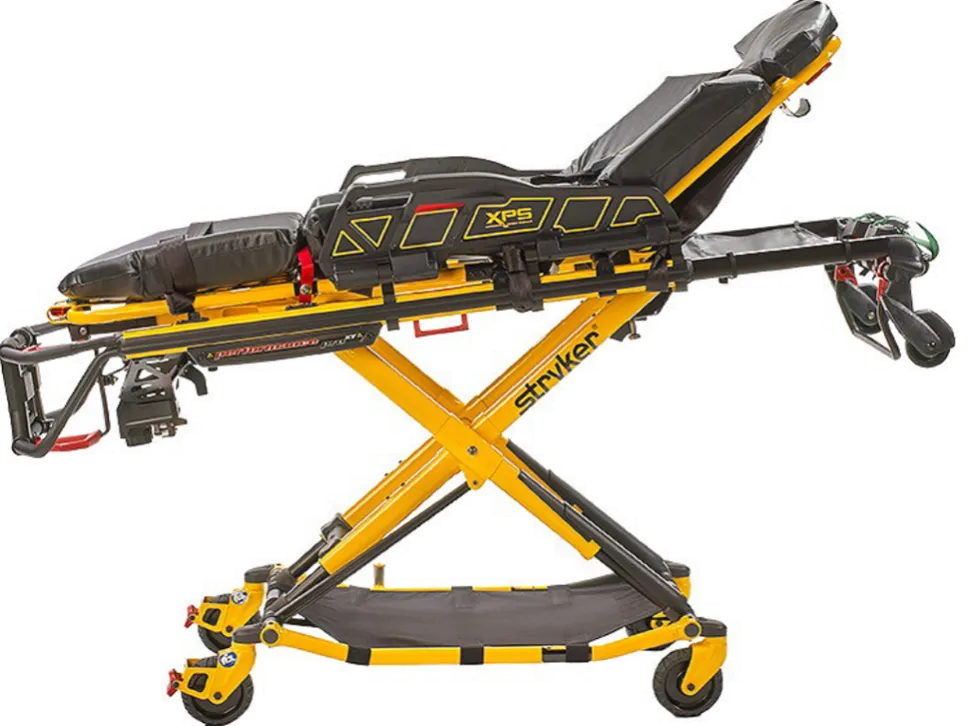
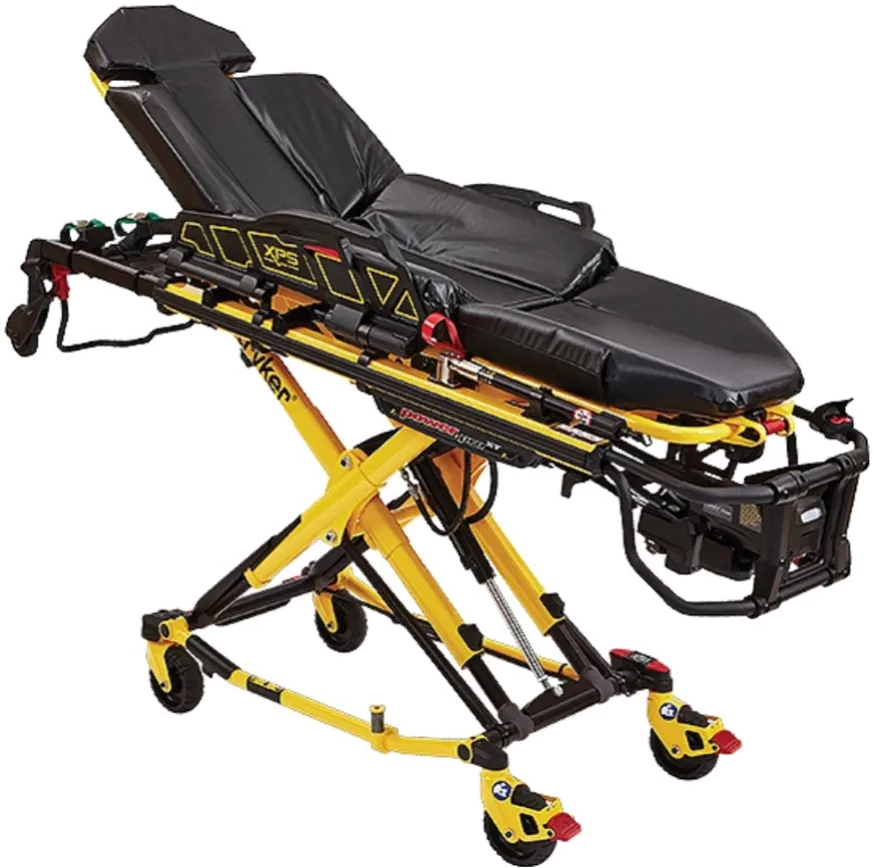
With the introduction of the AW101 platform, the rotorcraft fleet of 330 Squadron of the Royal Norwegian Air Force had no approved means of carrying and securing both the manual Performance-PRO XT and the electro-hydraulically powered Power-PRO XT ambulance stretchers. The squadron therefore requested a design that would allow both models to be installed across the fleet, so that crews could use the one best suited to each mission, thereby supporting the Search and Rescue service by enhancing quality and personnel safety, and by improving patient transfer between aircraft and hospital care or ground vehicles.
Design requirements
Product constraints and criteria were based on:
| The total mass of the locker system shall not exceed 20 kg. |
|---|
| The locker system shall secure either a Stryker Performance-PRO XT or a Power-PRO XT stretcher under the flight conditions. |
| The locker system shall transfer the loads from the stretcher front wheels to the rotorcraft floor without exceeding the floor allowable loads. |
| The locker system shall be installable quickly and without tools. |
| The locker system shall have two release mechanisms, one on each side of the stretcher's longitudinal centreline, positioned symmetrically about it. Actuating either release mechanism alone shall release the stretcher. |
| Each release mechanism shall be inclined to allow smoother one-handed operation. Winter glove over-size shall be accounted for. |
| The design shall be based on the airworthiness requirements stated in the Declaration of Design and Performance. |
Context
To meet structural requirements for emergency landing, flight, and ground loads, the primary structural elements were machined from aluminium 7075-T6. Fasteners were A2-70 stainless steel in lower-stress zones and A286 in higher-stress zones. All structural parts were anodised to protect against corrosion and wear, while secondary covers and protective elements used powder-coated aluminium 2024-T3 sheet metal or polyamide 6.6 / polycarbonate. Structural strength and flammability performance were verified through static and flame testing at a certified third-party laboratory. Images are illustrative only and do not show the final product.
1 / 3